
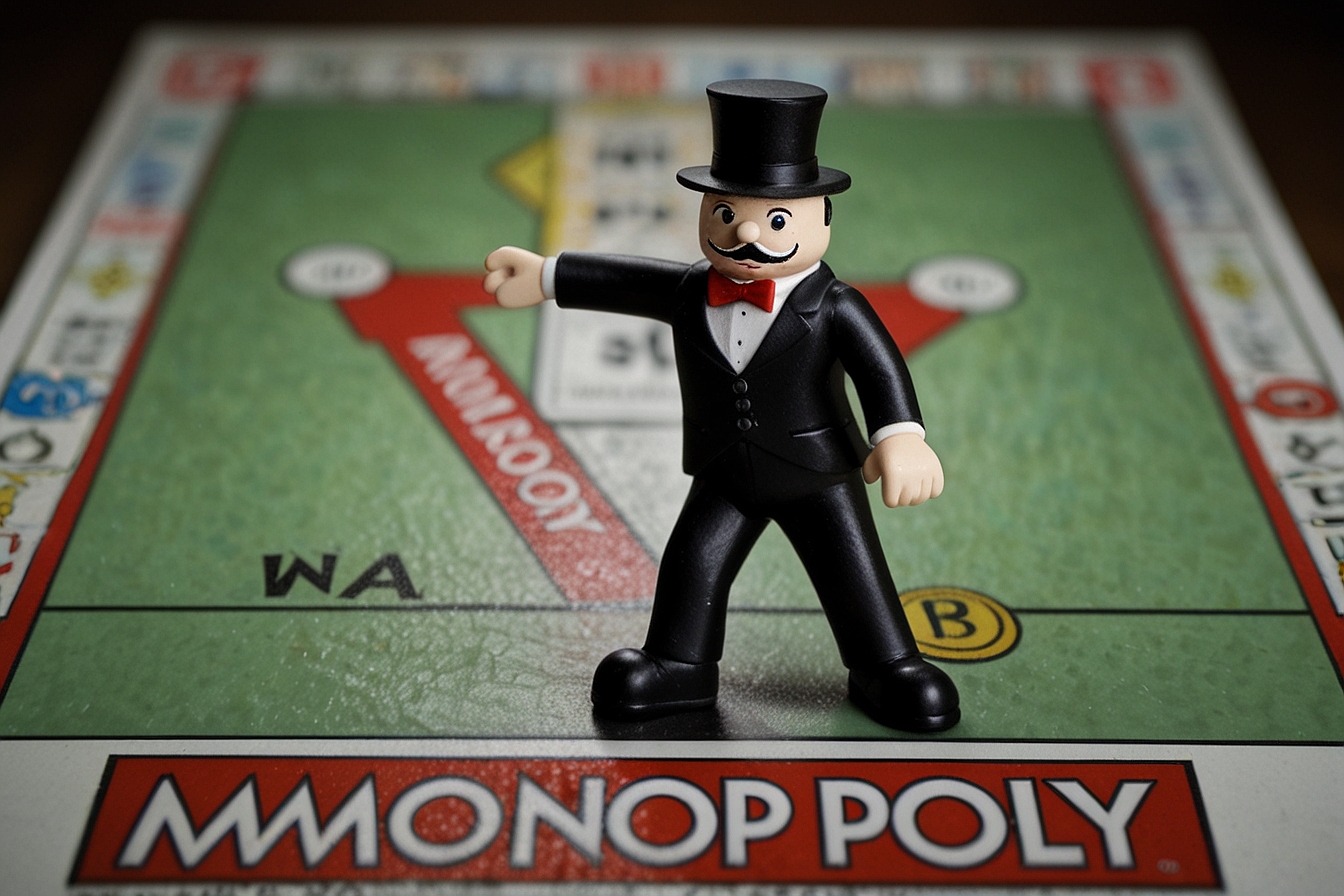

The Monopoly Man: Myths and the Icon.
This article will discuss the origins of the Monopoly Man, the myths that formed his character and how he has been developing through the years to become the icon of capitalism and affluence within popular culture.
The Genesis of the Monopoly Man
The version of Darrow however simplified the rules and made it more commercialised, interested in the accumulation of wealth and property.
In the first edition of Monopoly, the participants were able to buy houses, rent, and construct houses, as they tried to bankrupt their rivals. The mass production of Monopoly made it so successful and the game became a household name in the United States and subsequently other parts of the world.
Herbert, who probably invented the visual image of the character we know as the Monopoly Man.
Previous Monopoly advertisements had many various names of the character, including Rich Uncle Pennybags and Mr Monopoly.
The gentleman in the advertisements was an older, jovial-looking man in a top hat, monocle, moustache, and suit all representative of richness, old money, and elite.
In spite of the capitalistic background of the game, advertising helped to make it obvious that the character was not an evil one; on the contrary, it looked cartoonish and even friendly.
Myths concerning the Monopoly Man.
The Monopoly Man is another legendary figure over the years, but he is a victim of a number of myths and misconceptions.
But this is not in reality so. Despite the fact that most people strongly remember the Monopoly Man with a monocle, the initial images of the character did not show him wearing one.
The other myth regarding the Monopoly Man is that he is the mascot of the game which is actually not the case.
As Monopoly gained popularity the character of the Monopoly Man started to acquire other symbolic meanings. The aspect of the game of acquiring as much property as one could, making his rivals go bankrupt, and controlling the board became a jocular depiction of the capitalist acquisition of wealth.
The design of the game, inspired by the game titled Landlord, aimed to critique economic inequality in the first place, focusing on the risks of monopolies. The authors of the Landlord’s Game, with Elizabeth Magie being one of them, planned for the game to point out the wrongs in monopolistic capitalism and make people reflect on the distribution of wealth.
Naturally, the irony lies in the fact that Monopoly became a favourite pastime in a capitalist society, and the Monopoly Man appeared as the symbol of the same system that the game originally aimed to criticise.
The face of a man in a tuxedo and top hat collecting rent on all players who landed on his properties became an icon of accumulation of wealth, power and resource exploitation, which both admired and condemned the rich elite.
The Development of The Monopoly Man
The Monopoly Man has experienced a number of changes over the decades not only in how he used to appear but also in his contribution to the game.
As society developed, the popular culture surrounding the Monopoly Man evolved as well. Although he was once regarded as a neutral figure, as the idea of capitalism became more disputable, people began to perceive the Monopoly Man with more suspicion.
ich the idea of capitalism became more disputable, the Monopoly Man started to be perceived with more suspicion. Even though there were those who took him as a representation of corporate greed and the bad side of the American Dream, there were those who found him to be a harmless and nostalgic character.
In recent years, Hasbro, the makers of Monopoly, have revised the game according to present-day sensibilities. Other iterations of the game, like Monopoly: Socialism and Monopoly: Electronic Banking have tried to solve criticisms of the traditional message behind the classic game on capitalism.
He has featured in TV commercials and social media parodies. Although the game itself has undergone revisions, the image of the Monopoly Man continues to testify to the perennial popularity of prosperity and success in a capitalist environment.
Conclusion
The Monopoly man is a long-lived cultural symbol, which represents not only the richness of the capitalist society but also the contradictions of that society. Some would view him as an innocent, fun-loving character, whereas others may view him as a warning of the extravagance of the upper classes. His top hat, his monocle (or the absence thereof), and his moustache have become something symbolic to the realm of Monopoly, yet they represent something so much bigger: the intricate interaction of money and power and social structures.
He remains a fascination to the popular mind, as an embodiment of the capitalist ideal and as someone who can make people wonder about the ethical problems of money and authority. Despite its admiration or disdain, the Monopoly Man will always be a permanent feature of pop culture, and it will continually remind us all about the world in which we are living and about the game which we are all playing.